
Protecting the surroundings we work in
Responsible fuel handling starts with protecting land and water, controlling waste and avoiding unnecessary loss. Care at each transfer helps protect the surroundings in which people live and work.
How we reduce our impact
Aviation fuel must be stored, moved and transferred without spills, leaks or contamination. When we plan a service with you, we build in the environmental precautions the site requires, and we agree them with you before work starts.
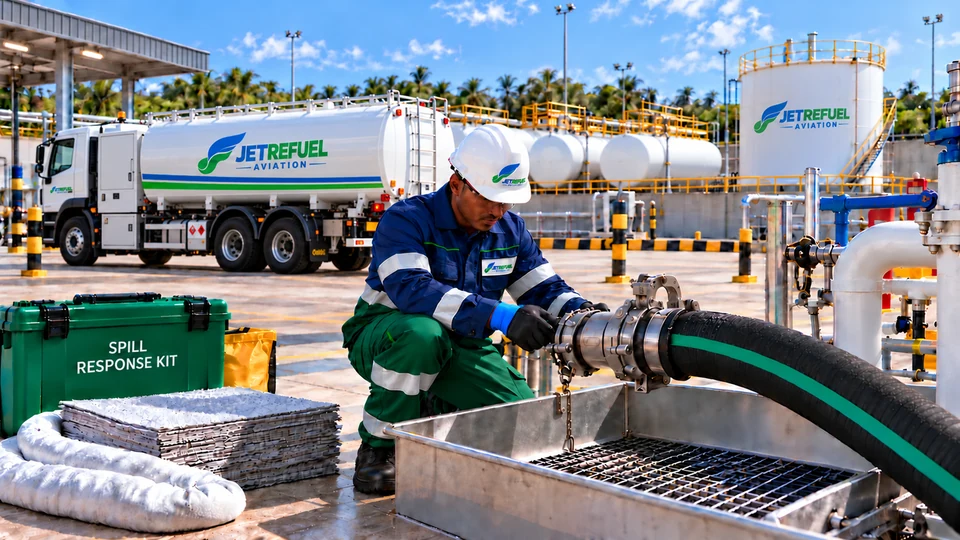
- Preventing spills and leaks. Containment, equipment kept in good condition, and checks before each transfer.
- Responding quickly and correctly. If a spill occurs, the site’s emergency procedure is followed straight away and incidents are reported as required.
- Handling waste properly. Fuel-contaminated water, used filters and absorbents are handled under the site’s rules and applicable Nigerian regulations.
- Reducing product loss. Quantities are measured and reconciled at every handover, so less fuel is lost or wasted.
Resources and continuous improvement
Efficient planning can reduce avoidable journeys, vehicle idling and unnecessary use of water and electricity. Discuss the resource requirements and environmental precautions relevant to your service with our team.
For onboarding or a service review, ask which environmental arrangements and supporting records apply to your location.
Honest about fuel and the environment
Conventional Jet A-1 is a fossil fuel, and we do not describe it as sustainable or carbon neutral. Our environmental priorities are preventing spills and contamination, handling waste responsibly and reducing avoidable product loss.
Interested in sustainable aviation fuel (SAF)? Ask us, and we’ll tell you honestly what can and cannot currently be arranged.
Ask about environmental requirements